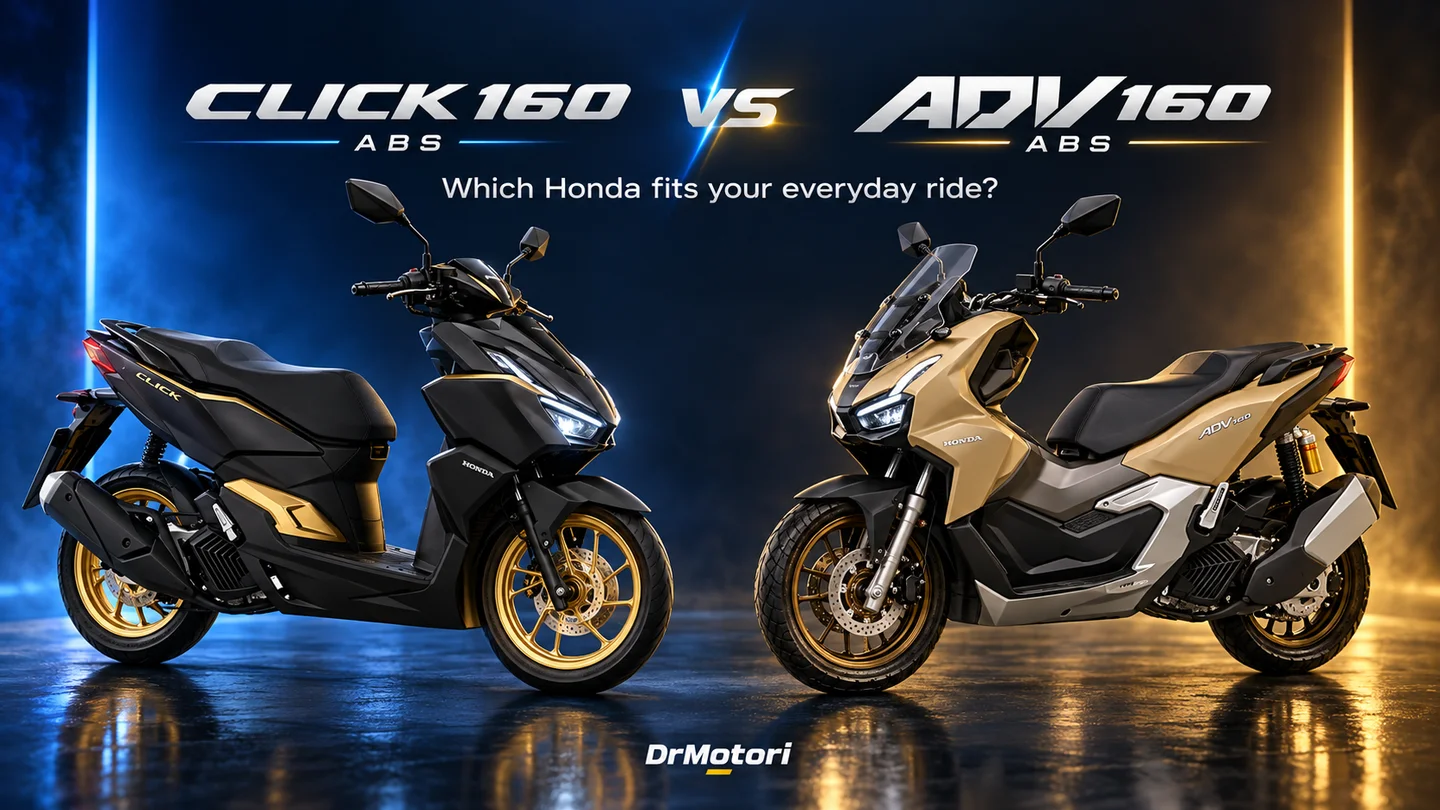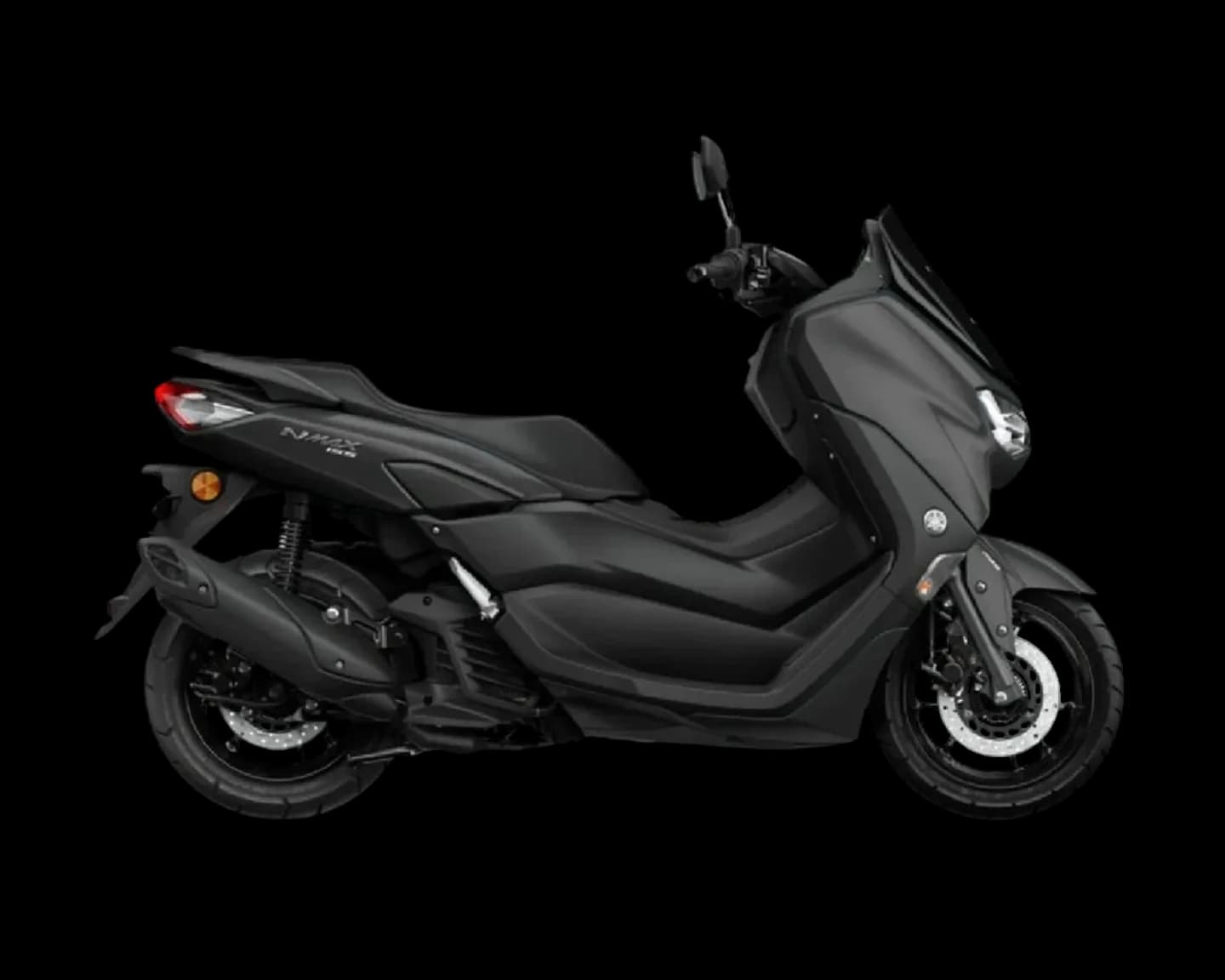
NMAX or ADV: where should you start?
If the Honda ADV's adventure styling and the version advertised with ABS matter to you, keep the ADV 160 ABS on your shortlist. If you prefer the NMAX's simpler urban design, the NMAX 155 is also worth considering. Your final choice depends on the exact trim, price and mechanical condition of the scooter you intend to buy; the Honda or Yamaha name alone does not settle it.
Both are automatic scooters, so you do not need to change gears yourself while riding. Compare their styling, the equipment on the actual version and the purchase cost. The numbers 155 and 160 in their names alone do not establish which accelerates faster or is more comfortable.
Exactly which NMAX and ADV are we comparing?
This article compares the NMAX 155 STD with keyed ignition presented by Niroomotor with the Honda ADV 160 ABS offered by Hamtaz Motor. A trim is a version of a model with particular equipment; ABS availability, for example, may differ between trims.
The Honda ADV in this comparison is a different model from the Hamtaz ADV and Hani ADV. The NMAX also has multiple versions; do not bring another version's specifications into this comparison simply because it shares the name. The sources do not identify the exact production year of either example. Before buying, check the trim and year recorded in the documents of the actual scooter.
Styling: which do you prefer?
In the published images, the NMAX has softer body lines. Its integrated front design gives it the appearance of an urban scooter. The ADV's angular panels, windscreen and different body shape give it a more adventurous look. This difference is visible at first glance, and personal taste plays a part.
Styling alone does not establish that the ADV handles every rough road better or that the NMAX is necessarily more comfortable. To assess comfort, check foot placement, your reach to the handlebars and your seating position on the actual scooter. Riders vary in height and body shape; liking the design does not replace this check.
Comparison of documented specifications
Scroll horizontally to see all columns.
| Specification | NMAX 155 STD with keyed ignition | Honda ADV 160 ABS |
|---|---|---|
| Engine displacement | 155 cc; stated by Niroomotor | 157 cc; stated by Hamtaz |
| Transmission | Automatic CVT | Automatic CVT |
| Fuel tank capacity | 7 litres; stated by the supplier | 8 litres; stated by the supplier |
| Front brake | Disc; stated by the supplier | Disc; stated by the supplier |
| Rear brake | Disc; stated by the supplier | Disc; stated by the supplier |
| ABS availability | Not specified in the source for this trim | Advertised by the supplier; channel count unclear |
| Lights and display | Digital display advertised | LED front and rear lights and digital display advertised |
| Exact production year of the source version | Not specified | Not specified |
Why are power and seat height absent from the table?
Some specifications are not sufficiently documented for a precise comparison. The NMAX source gives power and torque without clear units. Hamtaz's page describes the ADV as air-cooled in its summary and liquid-cooled in its detailed description. We therefore do not use these figures to declare one scooter superior to the other.
Comparing seat height and weight also requires consistent information for the same year and trim. Placing uncertain figures side by side does not help you choose. The table above contains supplier-declared specifications; it is not a road-test result.
What differs in everyday commuting?
Both models use a CVT to transmit power automatically, so you do not need to operate a clutch or change gears manually while riding. Gear operation is therefore not the main difference between them.
For your commute, practical questions matter more: can you comfortably reach the ground in your usual shoes? Can you move the scooter easily in your parking space? If you carry a passenger, are their seat and legroom suitable? Check these points together when viewing both examples.
This article does not include a road test of suspension smoothness, comfort on longer journeys or cornering behaviour. If those factors determine your choice, you need documented riding experience or an assessment of the actual version.
Disc brakes and ABS are different things
Disc describes the type of brake; ABS is an anti-lock braking system. Disc brakes alone do not establish that a scooter has ABS.
Hamtaz advertises the Honda ADV 160 in this article with ABS. However, the reviewed page does not clearly state the channel count, so the ABS label alone does not establish that both wheels have anti-lock braking. The source for the NMAX STD with keyed ignition also leaves ABS availability unspecified. Do not interpret this uncertainty as meaning that all NMAX versions lack ABS.
If ABS is a requirement for your purchase, confirm it on the actual scooter and in its documents. Read a simple explanation of ABS and CBS to understand what to ask during a viewing.
What does the ADV's 8-litre tank mean for you?
The suppliers state a 7-litre tank for the NMAX and an 8-litre tank for the ADV. On these figures, the ADV has one litre more capacity. If both scooters consume fuel at the same rate, the larger tank lets you carry more fuel.
However, we have not measured the real-world consumption of these two versions under matching conditions. Tank capacity alone therefore cannot establish the exact distance before refuelling or that the ADV uses less fuel. To estimate your commuting needs, you need your usual distance and recorded consumption for the same version.
How should you compare purchase and maintenance costs?
When comparing prices, choose two examples in comparable condition. Comparing a new scooter's price with a used example without accounting for year, mileage and condition does not show the actual cost difference. An advertisement's asking price is not necessarily the transaction price.
Ask the seller or mechanic separately about parts and labour for the same trim. Record the prices of oil, consumables, transmission servicing and brake servicing, together with part quality and the quote date. This article does not have documented costs under matching conditions to declare a maintenance-cost winner.
Record these four costs for each example
- The final purchase price of the actual scooter, together with its year, trim, mileage and ownership-document status.
- Initial servicing or required repairs, with a mechanic's estimate for that particular example.
- Transmission servicing: record the cost of required parts and labour separately.
- Consumables such as tyres, brake pads and the battery, using comparable brands and quality and recording the quote date.
Which should stay on your final shortlist?
Consider the ADV 160 ABS if you prefer its adventure styling and want a version advertised with ABS. Confirm the equipment on the scooter you are considering and check whether the final price and initial expenses fit your budget.
Consider the NMAX 155 if you prefer its urban appearance and softer lines. Establish the exact trim and ABS availability on the actual example, then compare its price, condition and servicing costs with your chosen ADV.
If both pass these checks, make the final choice based on how the actual scooter fits your body and your daily route. A used scooter with a clear service history is different from one that only looks clean. Our used-motorcycle buying checklist can help you during the viewing.
See the specifications of these exact versions on DrMotori
Do all NMAX and ADV versions have identical specifications?
No. The year, market and trim can change their equipment and specifications. This article concerns the NMAX 155 STD with keyed ignition presented by Niroomotor and the Honda ADV 160 ABS offered by Hamtaz. The Hamtaz ADV and Hani ADV are outside this comparison.
Sources and review date
The two versions were reviewed on 12 October 2026 using Niroomotor's official NMAX STD with keyed ignition page and Hamtaz Motor's Honda ADV 160 ABS page.
This article compares declared information and buying checks. It does not add a road test, acceleration or fuel-consumption measurements, or owner reviews. The sources do not identify the exact production years of these versions; before buying, match the specifications to the actual scooter.