Click or ADV: which belongs on your shortlist?
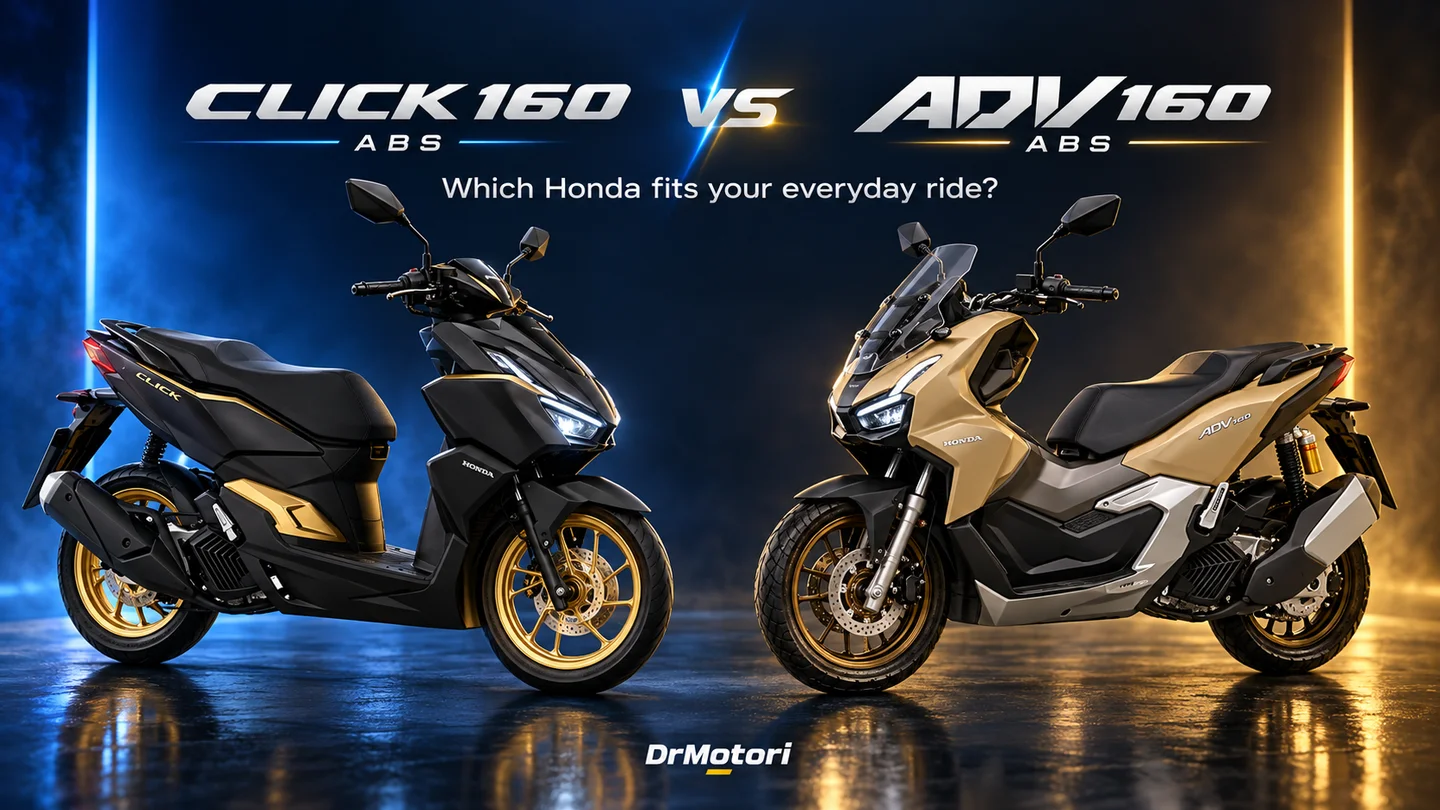
The Click’s open footwell and the ADV’s screen and raised centre section provide different everyday layouts. If you mount and dismount frequently, assess that before focusing on displacement. Hamtaz lists CVT and ABS for both, so those labels alone do not separate them.
The ADV product page lists greater tank capacity, while the Click handbook and product page disagree. We compare those specific differences and version limits against your needs.
Which Click and ADV are the references?
The reference listings are Hamtaz’s “Honda Click160 ABS” and “Honda ADV160 ABS”. A product name on a listing does not replace verification of the actual scooter and manufacturer documents. We do not transfer these specifications to Hani, Blenta or other versions; handbook discrepancies are documented in the source section.
Sporty city styling or an adventure-inspired look?
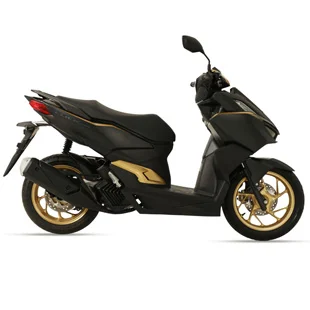
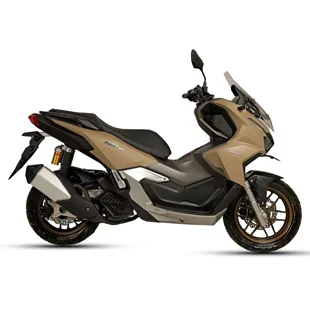
In the product images, the Click has angular panels and slim lights, without the ADV’s tall front windscreen. The dark bodywork and gold details of the pictured example give it a sporty appearance. The ADV’s screen, more prominent panels and different body shape borrow the visual language of adventure motorcycles.
Preference matters here, but consider how that shape fits your routine before choosing a colour. If your parking space is narrow, measure the actual scooter where you intend to keep it. Look through the windscreen from your own seated position, too; a photo cannot establish how well it will protect you from wind.
The ADV’s styling is not proof of off-road capability. If unpaved roads are a regular part of your route, you need to assess the tyres, suspension and documented riding performance of the exact version.
Honda Click 160 vs ADV 160: the comparison table
Scroll horizontally to see all columns.
| Specification | Honda CLICK 160 ABS | Honda ADV 160 ABS |
|---|---|---|
| Engine displacement | 157 cc, supplier-declared | 157 cc, supplier-declared |
| Transmission | Automatic CVT | Automatic CVT |
| Supplier-declared fuel tank | 5.5 L handbook / 6 L product page | 8 litres |
| Supplier-declared front / rear brakes | Disc / disc | Disc / disc |
| ABS in the supplier’s description | Listed; channel count unspecified | Listed; channel count unspecified |
| Supplier-declared front / rear lights | LED / LED | LED / LED |
| Supplier-declared instruments | Digital | Digital |
| Exact model year in the source | Not specified | Not specified |
Compare mounting and foot placement
Both listings specify a CVT. For everyday differences, focus on body layout: the Click has an open footwell, while the ADV has a raised centre section and screen. Frequent mounting and dismounting makes that movement worth trying on both.
For luggage, try your own helmet or bag in the actual compartment. An open floor does not itself establish a permitted load area; use the matching handbook for load limits and placement.
The ADV tank is listed as larger; the exact gap is unsettled
The Hamtaz pages state 8 litres for the ADV and 6 for the Click, while the linked Click handbook states 5.5. The stated ADV capacity is greater, but the gap is not conclusively two litres. These capacities alone do not establish range or fuel economy.
Check the full variant name when comparing brakes
Both selected versions are advertised with ABS, the anti-lock braking system. The reviewed pages do not specify the number of channels, so the ABS label alone does not establish anti-lock braking on both wheels. Disc brakes describe the brake type; they do not, by themselves, prove ABS is fitted.
If a seller offers a Click CBS, do not treat it as the Click ABS in this table. Check the actual equipment, relevant indicators and manual for that variant. Our guide to ABS and CBS explains the questions to ask.
Four checks to make during each viewing
- Sit on the scooter in your usual riding footwear. Check your reach to the ground, handlebars and brake levers.
- Ask to see the under-seat compartment. With permission, try the helmet or items you actually intend to carry.
- If you regularly carry a passenger, check their seating area and foot space as well.
- Assess moving the scooter in your parking space and using its stand under safe conditions. Liking the product photo cannot answer these questions.
Identify what an ADV premium buys you
A screen, different body layout and larger listed tank are differences worth pricing. Softer suspension, greater durability or lower running costs have not been measured by these sources. Both listings mention ABS, so that label alone is not a distinction; establish the actual channel count and system condition.
For a used example, use the new-versus-used cost sheet and include the repair estimate.
Explore these exact models and their recorded prices
Which is better as a first scooter?
The model name alone cannot answer that. Both versions in this guide are automatic. For a first scooter, assess control while stopped, how the seating position fits you and the budget for purchase and servicing. Rider training and suitable protective equipment are part of preparing to use either one.
Sources and review date
Hamtaz Motor’s official descriptions of the Honda CLICK 160 ABS and Honda ADV 160 ABS were reviewed on 13 October 2026. This article concerns the versions presented for Iran. The cover is a promotional composite based on reference images of both models, rather than a photograph of a test or ride.
The viewing and cost advice is a buying guide. This article does not report a road test, an owner’s experience or measurements of fuel consumption or acceleration.
On 21 October 2026, the Click product page stated 6 litres, while its linked handbook, PDF page 143, stated 5.5 litres. Exact version correspondence is not established, so the discrepancy remains explicit.
The handbook linked from the ADV page is titled “Blenta ADV160 / HAMTAZ”. Its correspondence with the product labelled Honda ADV160 on that page is unconfirmed; its specifications have not been transferred to this reference version.