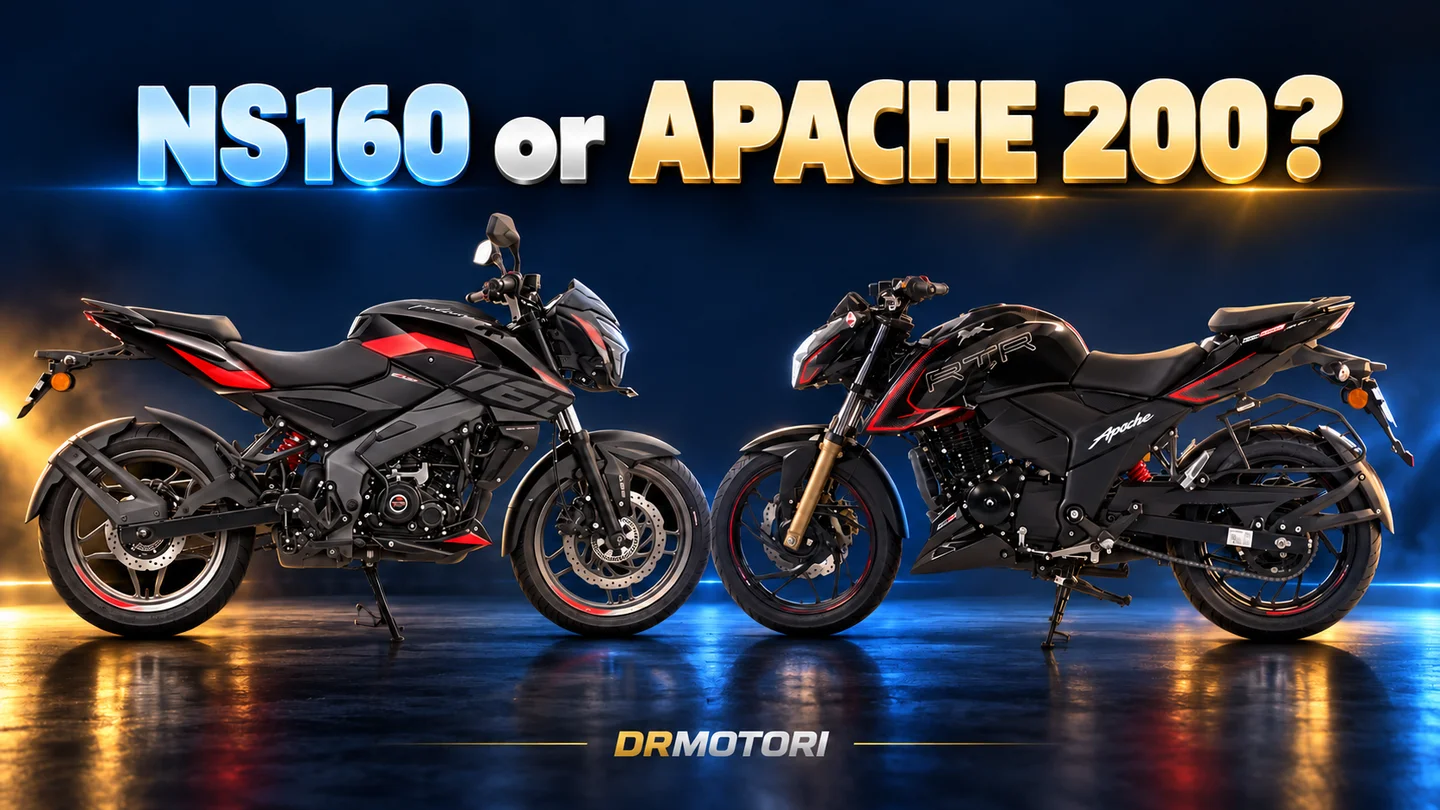
If you are choosing between a Pulsar NS160 and an Apache 200, you probably want a sporty-looking manual motorcycle for everyday journeys as well as something you enjoy looking at. The Apache has more power on paper, but the Pulsar’s brakes and front suspension give you more to consider. Your budget also determines which version and individual motorcycle you can actually buy.
We compare the India-market NS160 with dual-channel ABS and an upside-down fork against the Apache RTR 200 4V DFiLOGIC described in Niroo Motor’s handbook for Iran. Do not assume every NS160 sold in Iran has the selected Pulsar’s equipment.
The engine is the first difference
The Apache has a larger engine. The stated outputs are different too: 15.46 kW for the Apache and 12.5 kW for the Pulsar. That gives the Apache a higher published peak power figure, which matters if output is high on your buying priorities.
Peak output does not tell the whole story of pulling away from traffic lights or climbing a hill with a passenger. Engine condition, gear selection and load also affect the result. These figures cannot establish acceleration times or tell you which individual motorcycle will lead in every situation.
Selected versions at a glance
Scroll horizontally to see all columns.
| Feature | Selected India-market Pulsar NS160 | Apache RTR 200 4V DFiLOGIC, handbook reference |
|---|---|---|
| Displacement | 160.3 cc | 197.75 cc |
| Peak power | 12.5 kW at 9,000 rpm | 15.46 kW at 8,500 rpm |
| Peak torque | 14.6 Nm | 18.1 Nm |
| Cooling | Oil cooled | Oil cooled |
| Fuel tank | 12 litres | 12 litres |
| Front suspension | 37 mm upside-down fork | Conventional telescopic, oil damped |
| ABS | Dual channel on selected trim | Not established by the reference handbook |
Pulsar figures come from Bajaj’s specification page; Apache figures come from the handbook supplied for Iran. The table does not imply matching model years or equivalent trims.
Buy the Pulsar’s precise brake specification
Dual-channel ABS provides anti-lock control for both wheels. Bajaj lists it for the selected Pulsar. If a seller offers an older NS160 or a different trim, check that motorcycle’s equipment separately.
The Apache handbook used here does not establish its ABS equipment. If anti-lock braking is a purchase requirement, obtain a clear answer for the particular motorcycle. A disc brake alone does not establish ABS. Our ABS and CBS guide explains the terminology.
What does an upside-down fork change?
On the selected Pulsar, the thicker fork sections sit at the top: this layout is called upside-down or inverted. The reference Apache has a conventional telescopic fork. This is a structural difference, but it does not by itself prove which motorcycle feels softer over bumps. Suspension settings, component condition and tyres matter too.
At a viewing, ask a mechanic to check fork leaks and steering movement. Attractive suspension hardware cannot replace sound mechanical condition, particularly when comparing used examples.
For commuting, take the seating position seriously
Sit on both in your usual footwear. Where do your knees rest against the tank? How far do you lean to reach the handlebars? Which motorcycle can you manage more easily at a stop? If you carry a passenger, have them check the seat and footpeg reach too.
Both reference versions have a stated 12-litre tank, so capacity is not a reason to choose one over the other. Equal capacity does not imply equal consumption. To compare fuel costs, you need recorded consumption on similar routes rather than engine displacement alone.
A cheaper asking price may not mean a cheaper purchase
Beside each asking price, record what needs doing before regular use: tyres, chain and sprockets, brake pads and overdue servicing. Then ask locally about the cost and lead time of correct parts for that trim. Those items can narrow or widen the apparent price gap.
For a used motorcycle, obtain a repair estimate before agreeing the purchase. Our used motorcycle checklist helps you prepare for the viewing. Without comparable local quotations, this article does not name a running-cost winner.
Which should you view first?
If higher output is a priority, give the Apache 200 serious consideration: the handbook figures support that advantage. If dual-channel ABS and the Pulsar’s front suspension layout matter more, start with an NS160 in the specified trim and inspect its actual equipment.
When choosing between two used examples, condition and service history can change your decision. A good choice fits your needs and leaves you able to maintain it after buying.
Explore these exact motorcycles
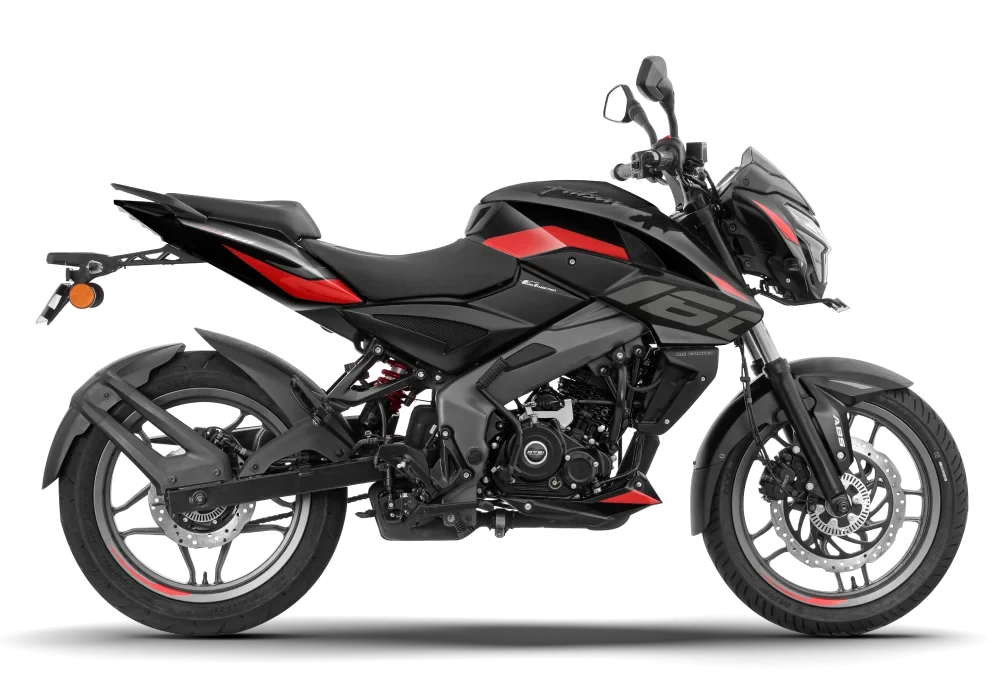
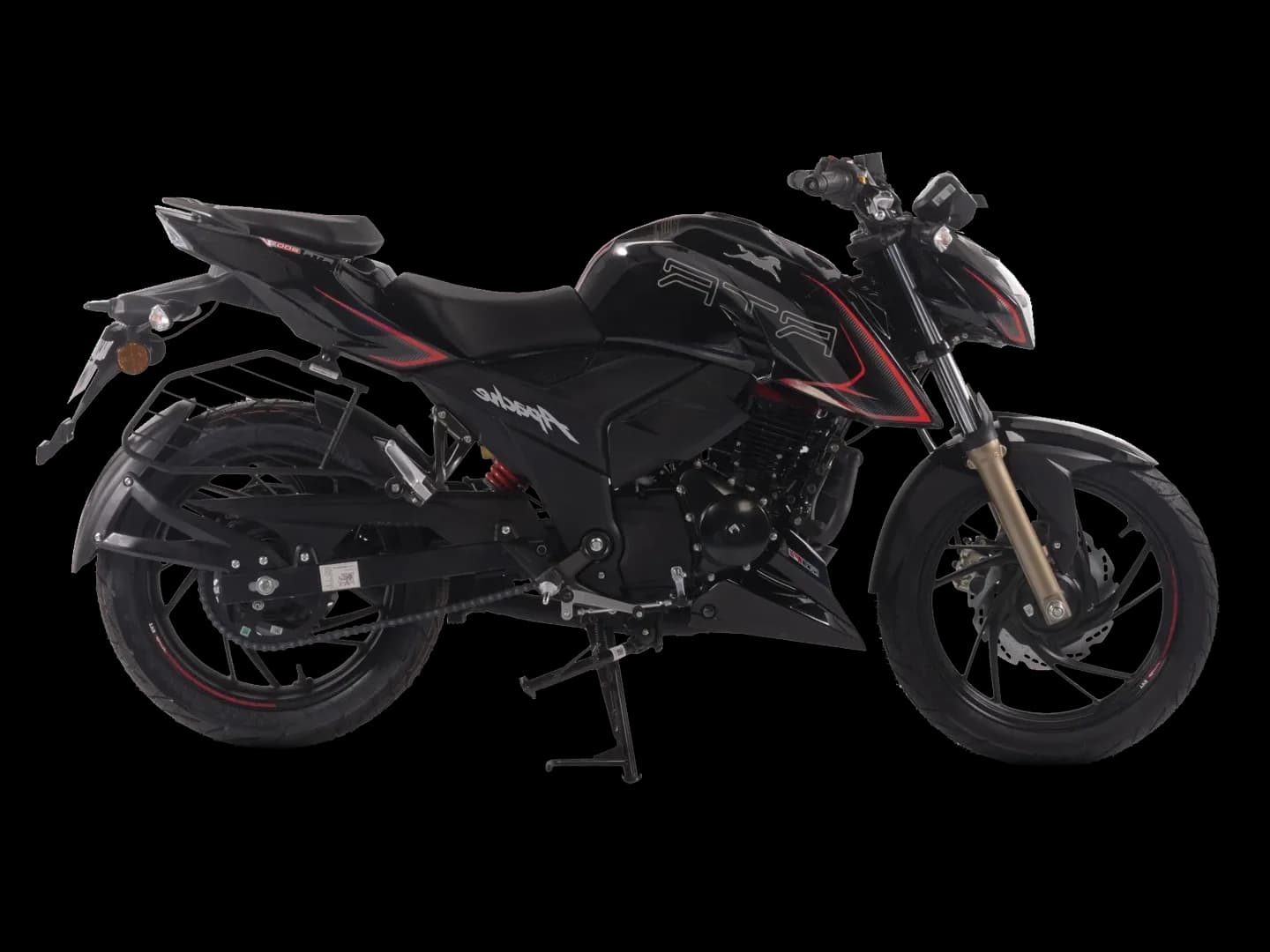
Which is better as a first motorcycle?
Do not decide by displacement alone. Consider seating fit, control at a stop, mechanical condition and your budget for training and maintenance. Lower output alone does not prove a motorcycle is easier to manage.
Does every NS160 have dual-channel ABS?
This article makes no such claim. The ABS specification belongs to the selected source trim. Check the trim and equipment on the actual motorcycle for sale.
Sources and review date
Bajaj NS160 specifications and the Niroo Motor Apache RTR 200 4V DFiLOGIC handbook, technical specifications on PDF pages 164–168; reviewed 18 October 2026. Exact production years of motorcycles offered for sale are not established. Apache product-page and handbook discrepancies are explained on its model page; this article uses the handbook. Conflicting Pulsar lighting information is excluded. This is not a road-test report; the cover is a promotional composite based on reference images.