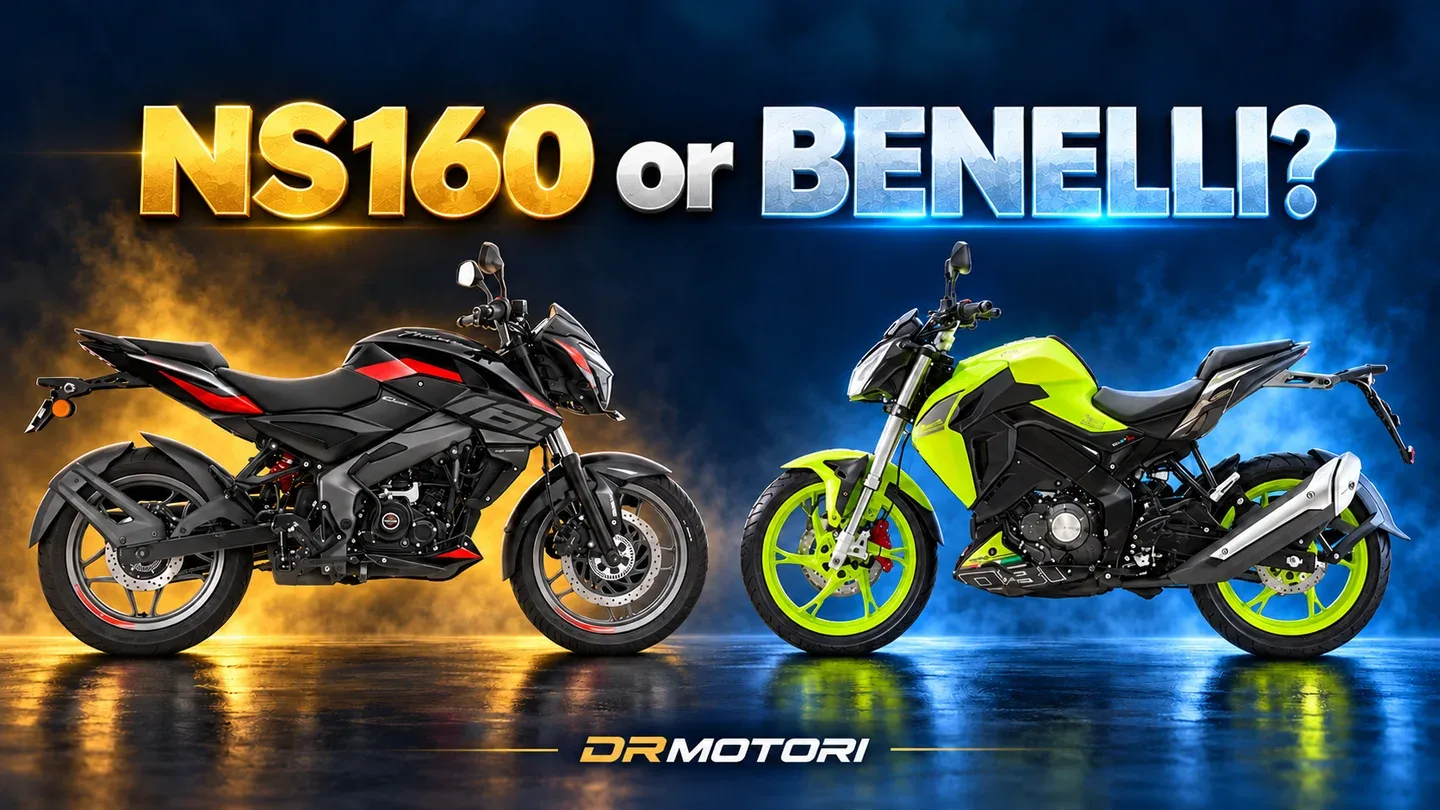
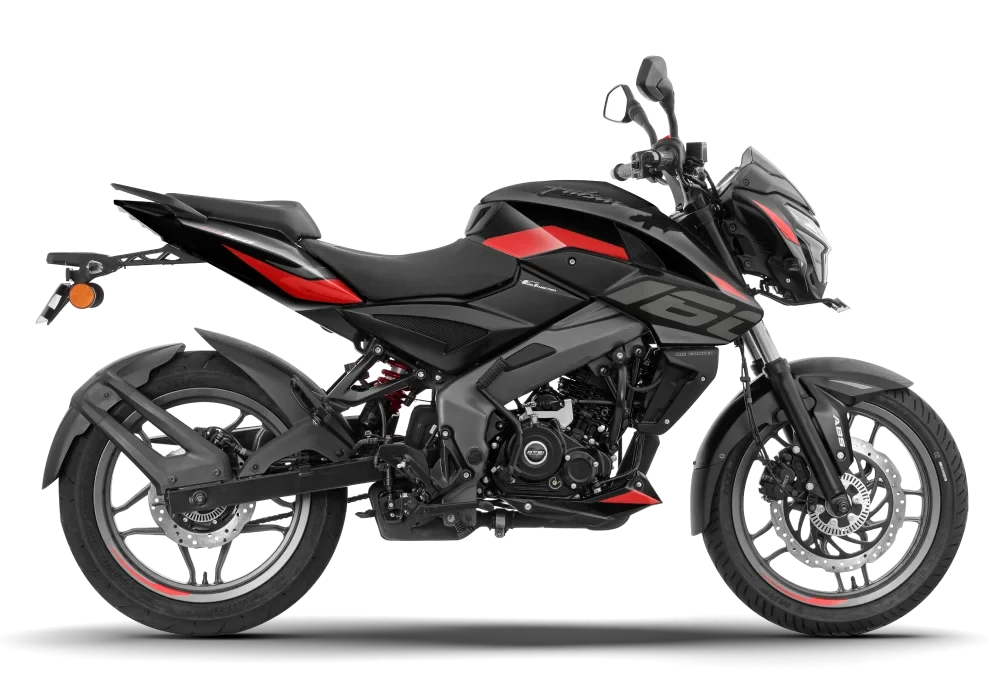
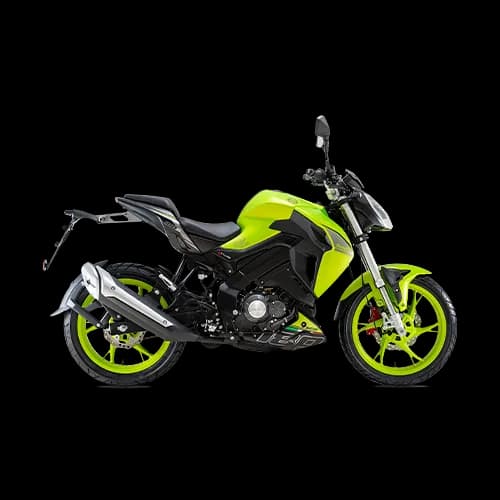
Picture the two motorcycles together: the black and red Pulsar with its sharp styling, and the green Benelli with a different tank and headlight profile. If you like both, that is where the decision begins. The Benelli has a larger engine, but its power advantage is not a reason to ignore everything else. The selected Pulsar brings a larger tank and specific braking equipment to the comparison.
We compare the India-market NS160 with dual-channel ABS and an upside-down fork against the Benelli 180S using its manufacturer’s specifications. When buying in Iran, check the year and equipment on the actual motorcycle against these reference versions.
How large is the power difference?
The official figures are 12.5 kW for the Pulsar and 13.3 kW for the Benelli: a difference of 0.8 kW in the Benelli’s favour. That establishes a slightly higher published peak output, rather than a large, guaranteed advantage in everyday acceleration.
Peak torque tells a different story: the Pulsar’s figure is slightly higher. Neither figure alone establishes which motorcycle performs better uphill or when pulling away. Gear selection, engine speed, load and mechanical condition all matter. Judging solely by the “160” and “180” names misses much of the comparison.
Differences to consider together
Scroll horizontally to see all columns.
| Feature | Selected Pulsar NS160 | Benelli 180S, manufacturer reference |
|---|---|---|
| Displacement | 160.3 cc | 175.3 cc |
| Peak power | 12.5 kW at 9,000 rpm | 13.3 kW at 9,500 rpm |
| Peak torque | 14.6 Nm | 14 Nm |
| Cooling | Oil cooled | Liquid cooled |
| Fuel tank | 12 litres | 10 litres |
| ABS | Dual channel on selected trim | Not specified on reference page |
Benelli lists a six-speed gearbox. Gear count alone does not prove higher speed, lower consumption or more relaxed riding; gear ratios and engine behaviour also matter.
Consider the tank and servicing together
The Pulsar has two litres more stated tank capacity. If you cover a long route daily, that is worth considering, but the actual interval between refills also depends on consumption. The 12- and 10-litre tanks do not establish which motorcycle uses less fuel.
Their cooling systems differ too. Coolant is part of the Benelli’s system, while the reference Pulsar uses oil cooling. When viewing a Benelli, ask the mechanic to inspect its cooling circuit as well. The difference alone does not establish better durability or lower costs; correct maintenance of each system matters.
If ABS matters, establish the trim first
The selected Pulsar is listed with dual-channel ABS, providing anti-lock control for both wheels. Do not extend that specification to every NS160. An older example or another trim may have different equipment.
The official Benelli page used here lists disc brakes but does not establish ABS fitment. We therefore do not label ABS as absent. If it is a purchase requirement, check the handbook and actual equipment before agreeing a deal. Our ABS and CBS guide helps you prepare the right questions.
Sit on both before choosing a colour
Check whether the motorcycle fits you, as well as whether you like its appearance. Sit on it in your usual footwear and check your reach to the ground, handlebars and controls. How much knee room is there when turning the handlebars? If you usually carry a backpack, how does that affect your seating position?
If you carry a passenger, have them try the seat and footpegs too. For a tight parking space, assess moving the motorcycle backwards and turning it around with the seller’s permission and in safe conditions. A power table and catalogue photograph cannot answer these questions.
Which advertisement represents the better purchase?
Suppose you find a cheaper Benelli, but it needs tyres and a chain. Its lower asking price does not yet establish a lower total cost. The same applies to a Pulsar with overdue maintenance.
Write the purchase price beside the cost of getting ready to ride: required servicing, tyres, brake pads, chain and sprockets, and repairs identified by a mechanical inspection. Ask a local workshop or service centre about prices and lead times for correct parts for that trim. “Parts are available” is incomplete without cost, quality and delivery time.
For a used purchase, read the used motorcycle checklist before the viewing. An individual motorcycle’s service history may matter more than the small difference in peak output.
So, Pulsar or Benelli?
If a larger tank and dual-channel ABS are priorities, start by viewing an NS160 in the specified trim. If you prefer the Benelli’s appearance and find its slightly higher stated output appealing, keep the 180S on your shortlist while establishing maintenance costs and the actual equipment fitted.
Once you have sat on both and written down the real costs of the two options, the decision usually becomes clearer. Look for the better match for your route, body and budget, rather than an overall winner.
Explore these exact models
Is the Benelli 180 faster than the Pulsar 160?
The reference Benelli has a higher peak power figure, but this article is not a speed or acceleration test. A conclusive comparison requires measurements of both versions under the same conditions. Displacement and peak power alone do not provide a complete answer.
Sources and scope
Bajaj NS160 specifications and official Benelli 180S specifications were reviewed on 19 October 2026. The Pulsar reference is the India-market dual-channel ABS, upside-down-fork trim. The Benelli reference is the manufacturer’s international page; identical equipment on every example in Iran is not assumed. Exact production years of motorcycles offered for sale are not established. Conflicting Benelli weight labels across official market pages and conflicting Pulsar lighting information are excluded as grounds for a recommendation. The cover is a promotional composite based on reference images; no joint road test was performed.